
Doing Business with Higher Education Institutions
A complete guide for vendors, manufacturers, and service providers looking to work with colleges and universities.
Doing Business with Higher Education Institutions
Here at BidFinderEdu, we’re ready to help you get up and running with higher education institution procurement. Higher Ed is often an overlooked opportunity for many vendors, manufacturers, and service providers. With US Higher Ed expenditures estimated in the billions collectively, don’t miss out on what could be for you in this market. This guide will show you how to identify opportunities, register as a supplier in varying systems, and position you to win more higher-ed contracts.
Ready to see what higher ed is looking for right now?
Register to be a BidFinderEdu member and get access to our active bids list.
Why The Higher-Ed Market Matters
If you’re thinking about higher-ed, you might be wondering what kind of products they purchase at universities, community colleges, etc. Many people are surprised to learn that higher education procurement seeks out goods and services varying from small components to large construction projects. Some examples of procured items from institutions seen on BidFinderEdu’s watch list include:
- Custodial Services
- Cleanrooms, Components, and Supplies
- Computer Systems for entire computer labs
- Bookstore Management Services
- Full HVAC Rebuilds
- Roofing Replacements and More!
Outside of the list above, it is important to note that many universities and higher-ed institutions have consistent, stable funding and prefer to make long-term relationships to ease the burden of procurement in the volumes they seek.
For information on what you can expect from individual higher-ed locations, coming soon is our full directory. This directory will have significant information for many institutions, along with insights related to when we have seen the most bid requests from said institutions.
How University Procurement Works
Centralized vs. Decentralized Systems
It is important to note that many universities operate using single procurement offices, but others may have department autonomy. This can make things a bit interesting to determine the best route/form of outreach.
Starting by looking for centralized procurement is usually best, and they may have links for further department segmentation where necessary.
Common (Outsourced) Procurement Platform Overview
Universities frequently utilize “Procurement Platforms” to centralize efforts in an outsourced manner related to goods and services they require. There are similarities between the systems, but how you operate each is different, and some may require registration to view full bid details.
These platforms include, but are not limited to:
- Jaggaer
- IonWave
- BidNet
- Bonfire
Comparison of Common University Procurement Platforms
| Platform | Typical Users (Universities / Systems) | Main Strengths | Vendor Registration Style | Bid Notifications | Interface & Ease of Use | Notes |
|---|---|---|---|---|---|---|
| Jaggaer (formerly SciQuest) | Many large universities and state systems (UNC, Penn State, UC system) | Mature system with deep workflow automation and document tracking | Central supplier portal (network-based) | Automated email alerts and saved search notifications | Moderate – feature-rich but dense interface | Industry leader in higher-ed procurement tools |
| IonWave | Mid-size and regional universities, community colleges, K-12 | Simple bid posting and response system | Each institution runs its own portal | Email alerts; optional saved categories | Straightforward and fast to load | Reliable, lower complexity; limited analytics |
| BidNet Direct | Multi-agency networks (Colorado, Michigan, NY, etc.) | Aggregates hundreds of agencies under one platform | Single registration covers multiple buyers | Email alerts and regional subscription options | Intuitive dashboard; web-based | Great reach for vendors selling to multiple states |
| Bonfire | Modern platform used by universities and municipalities | Clean interface, strong evaluation workflows | Per-entity registration (though profiles can be reused) | Email alerts and vendor dashboard | Excellent user experience; cloud-based | Rapidly growing in the education sector |
Internal Procurement Platform Overview
In addition to outsourced procurement platforms, some universities and higher ed institutions operate their own platforms.
These platforms are typically public-facing pages that are updated on a moderately regular basis by the campus staff or local government.
These may also include state or city run platforms that run the public bid portions of the procurement for all universities in their purview, such as an entire county or state of community and state colleges.
Example State-Run Portal: eVA, State of Virginia Marketplace: https://eva.virginia.gov/
Bid Thresholds and Purchasing Rules
Higher-Ed often have bid thresholds that drive the method of procurement order of operations.
Common Thresholds start as low as $5,000 for the need to bid publically. If the bid is provided publically, they are seeking the best price that can be supplied in a technically acceptable manner in most cases. This can be a great opportunity for a new vendor to get a “foot in the door” with particular locations, and a great way to see what target universities purchase.
Registering as a University Vendor
Registering as a vendor is often a crucial step in doing business with higher education. Unfortunately, most portals are going to require that you do this step separately. The good news, however, is that most of these portals and systems require the same information.
Common Steps Amongst Most Portals:
- Identify target university’s vendor registration page.
- Gather your company’s most recent and valid W-9, insurance information, certifications where applicable, and company references. Some higher-ed locations may also require more sensitive information such as financial stability information.
- In some cases, it may be beneficial to evaluate and complete any small business recognized minority or diversity information, if applicable. Universities may have active programs related to spending that could provide additional resources to your business.
Example registration at University of Wyoming: https://www.uwyo.edu/procurement/supplier-guide/supplier-self-registration.html
In the future, our university directory will provide vendors links for as many bid portal registrations as possible.
Understanding Bid Types and Documents
There can be a bit of a learning curve related to identification of varying bid types and learning to read them properly. A whole book could be written on this topic, but we’ll try to work in a crash course here to get you started.
RFP, RFQ, IFB, RFI, Sources Sought – What They Mean
| Acronym | Full Term | Purpose | When Universities Use It | What Vendors Should Provide |
|---|---|---|---|---|
| RFP | Request for Proposal | Used when the university needs a solution, not just a price — they want vendors to explain how they’ll meet the need. | Complex purchases like software systems, facility management, or specialized equipment. | Detailed technical proposal, pricing, and company qualifications. |
| RFQ | Request for Quotation | Used when specifications are already defined and price is the deciding factor. | Commodity items, materials, or straightforward services. | Simple price quote and confirmation you can meet the specs. |
| IFB | Invitation for Bid | A formal sealed bidding process where the lowest responsive and responsible bidder usually wins. | Construction, maintenance, and standard goods. | Formal bid submission following exact instructions; price-focused. |
| RFI | Request for Information | Used for research and market exploration — no award is made. | When planning future projects or assessing available vendors. | Overview of capabilities, experience, and product information (non-pricing). |
| Sources Sought | (Market research notice, common in public procurement) | Used to gauge supplier availability or interest before issuing a solicitation. | Early stages of a major project or grant-funded initiative. | Express interest and describe your capabilities — helps shape future RFPs. |
How to Read a University Bid Package
University bid documents can look intimidating at first — full of legal terms, attachments, and procedural checklists — but once you know what to look for, the structure is surprisingly consistent.
Most higher-education solicitations follow a similar pattern. Below is a breakdown of the key sections and what to focus on as a vendor:
| Section | What It Contains | Why It Matters | What You Should Do |
|---|---|---|---|
| Cover Page / Summary Sheet | Bid title, reference number, submission deadline, contact information. | This page defines exactly which bid you’re responding to and when it’s due. | Verify the due date and submission method (email, portal upload, physical delivery). |
| Scope of Work (SOW) | The detailed description of what the university needs — materials, services, or deliverables. | This section drives your pricing and proposal content. | Highlight any unclear requirements early and submit questions during the Q&A period. |
| Specifications or Technical Requirements | Detailed performance standards, dimensions, or compliance codes. | These dictate whether your product/service qualifies. | Double-check that you meet every requirement — or note exceptions explicitly. |
| Submission Instructions | Format, number of copies, file naming rules, labeling, and portal steps. | Non-compliance here often causes disqualification. | Follow these instructions exactly — no deviations. |
| Evaluation Criteria | How proposals will be scored (e.g., price 40%, experience 30%, approach 30%). | Helps you understand what evaluators value most. | Emphasize strengths in the highest-weighted categories. |
| Terms and Conditions | Legal and administrative clauses — insurance, payment terms, equal opportunity, etc. | Binds you contractually if awarded. | Review with your legal or management team before signing. |
| Addenda | Updates, clarifications, or extensions released after initial posting. | Addenda override earlier information. | Always acknowledge receipt in your submission; missing this can void a bid. |
Pro Tip: Be sure to highlight as you read through a bid package anything that may change your price – or the documents you supply with your bid.
Creating a Strong Capability Statement
Capability Statements are a method higher education, as well as other industries use, to act as a sort of company resume.
Many of the same guidelines for resumes apply to Capability Statements.
Basic information required:
- Concise (1-2 Pages)
- Company Information Section
- Highlights of Certifications
- Quality (Such as ISO, API, ASME, etc.)
- Business (Such as 8a, Minority Owned, WOSB, Veteran Owned, etc.)
- Work History
- Common NAICS Codes Worked
- Key Company Differentiators
Additional tips:
- Similar to resumes, it is best to review your capability statement frequently for accuracy and completeness, as well as relevancy to the intended recipient. Multiple versions may be necessary, so working with an easily editable layout is key.
- A capability statement is NOT a 20 page presentation that requires handholding to explain your capabilities. It is a short run-down that provides all your business highlights and – hopefully – piques their interest enough to learn more about what you have to offer.
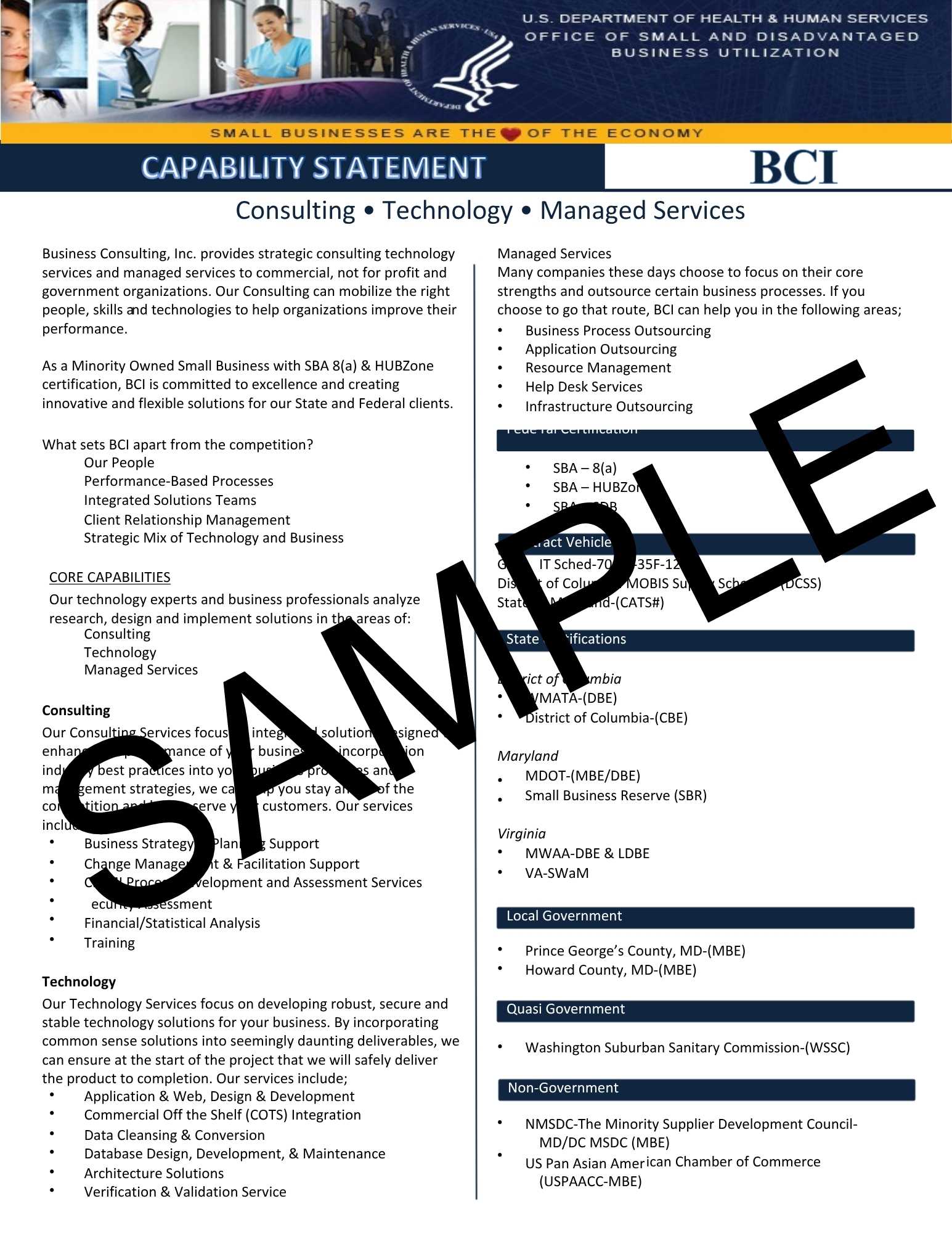
Capability Statement Example P1
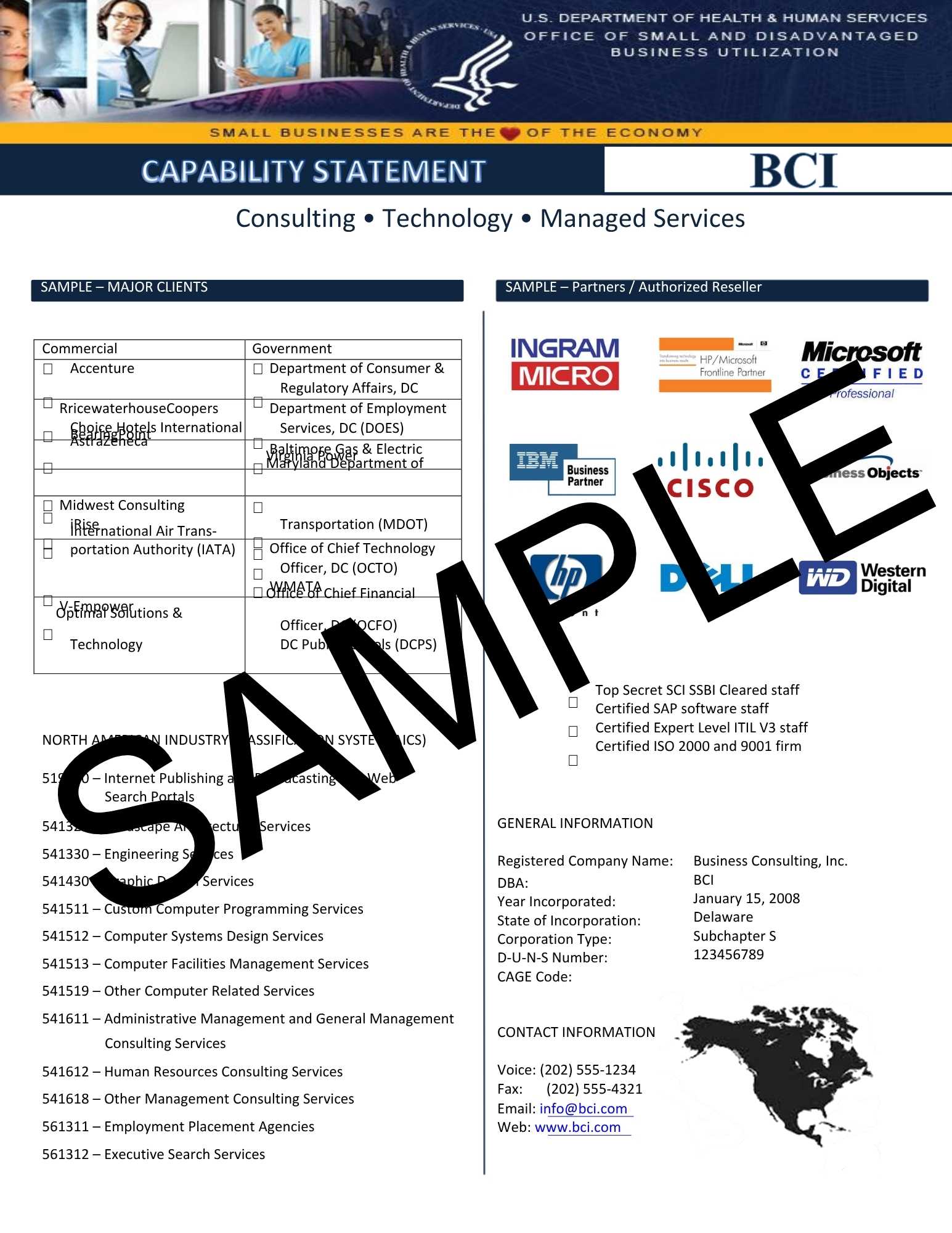
Capability Statement Example P2
Want to Jump Start Your Capability Statement?
Members receive access to a capability statement template for Canva and Powerpoint format. This can help to eliminate format-block and just get something going that is clear, concise, and readily editable.
Building Relationships with Procurement Offices
Building relationships with procurement offices is a crucial step in becoming more involved with Higher-Ed bidding. There are a few things that should be kept in mind regarding professionalism in communication that can help foster those relationships.
- Try not to be too pushy. Communication should be kept professional and, while requests for updates are expected, it’s best not to contact more frequently than once a week on most solicitations.
- Many universities and their funding sources have outreach/vendor days. It’s best to attend these if you have aspirations to bid on their projects. Showing interest in these public events typically encourages those running the events to make further introductions to their team members which can be quite valuable.
- When you do reach out for updates, be sure to include the solicitation number and brief title in your subject line. That helps the procurement contact know what this is about before even jumping in to respond.
In addition, many universities maintain public contact lists. BidFinderEDU maintains a list of publically listed contacts and this will be available as our Directory goes live.
Funding, Grants, and Partnerships
Higher Ed Universities often get funding via grants and other competitive public/private funding. A few things are worth touching on related to this.
- If the bid is regarding a public grant, you can get some details over whom is holding the grant and the contacts available via grants.gov. This is an invaluable resource and easily searchable.
- While some grants and partnerships may be short term funding, many projects will be long term with multiple needs over time. Keeping in touch can be a great idea in the case of long-term grants.
Interested in more related to grant opportunities?
Staying on top of grant funding can be a chore of its own, developing a process is important to keep everything straight. This further detailed guide will help you tailor a process for your needs.
Common Mistakes (and How to Avoid Them!)
Like all things in life, there are some mistakes that are easy to make, but careful planning and attention to detail can help avoid the most common. Let’s look at the top 3 mistakes that people make when detailing with public bids from Higher Ed Universities;
- Submitting bids late: This is a big no-no, and often will be subject to disqualification. It’s important that if you’re interested in bidding that you look at how long it would take you to prepare your response. If you think that you are a great fit for the bid but might not be done in time – go ahead and ask for the appropriate amount of time you need to get that submission in with suitable time for them to do so.
- Incorrect Document Submittal Formating: Make sure to pay attention to the detailed bid request information. When it’s important – the procurement team will provide you with an “instructions to bidders” section or document that will outline the important things/order to supply your bid. This is done in this manner to provide some consistency in review for the procurement team.
- Pay Attention to Revisions / Addenda: It’s easy to get sucked into the bid process itself and get some information together, but you really need to pay attention to the bid link for any updates to the bid documents. This will ensure you don’t miss any information updates such as detailed drawing additions, requests by the customer, or even notices of furnished (provided) equipment.
For more detail on these and other common mistakes, check out our upcoming page for the Top 10 Mistakes Vendors Make with Higher-Ed Bids.
Recap of the General Process and Next Actions
Now that we have gone over a run-down of what’s involved in Higher Ed bid sourcing, let’s recap what we’ve learned.
- Prepare Capability Information
- Identify Target Universities for Bids
- Register in their system of choice
- Monitor and Find a bid worth submitting for your team
- Prepare the bid and send (ON TIME)
- Follow-up as necessary in reasonable increments.
As you continue your higher ed solicitations journey, be sure to consider our active bid list as a source of inquiries, and soon we’ll have our Membership Toolkit, which will include many jumpstart features such as templates.
Resources and Tools
Whether you’re just starting to explore university procurement or you’re ready to refine your approach, the following tools and references can help you move from research to results.
Internal BidFinderEDU Resources
| Resource | What It Offers | Access Type |
|---|---|---|
| University Directory | Direct links to procurement portals, registration pages, and supplier diversity contacts across U.S. universities. | Free (expanding soon) |
| Capability Statement Templates | Professionally formatted examples and editable templates tailored for higher-ed vendors. | Members Only |
| Understanding Bid Portals | Detailed breakdowns of major procurement platforms like Jaggaer, IonWave, BidNet, and Bonfire. | Free Guide |
| Bid Review Checklist | A printable checklist to help ensure every submission meets requirements before you click “Submit.” | Members Only |
| Common Bid Mistakes Guide | Real-world examples of disqualifying errors and how to avoid them. | Free |
| Vendor Toolkit (PDF Download) | A consolidated package with sample forms, templates, and registration tips. | Members Only |
External References
| Organization / Resource | Description |
|---|---|
| NASPO (National Association of State Procurement Officials) | Offers broad state-level procurement principles and best practices. |
| SBA Learning Center | Provides free training on federal contracting, capability statements, and proposal writing. |
| APPA & NACAS | Higher-ed associations that often host supplier showcases and networking opportunities. |
| USAspending.gov | Federal spending database for understanding how universities use federal funds. |
| Regional Supplier Diversity Programs | Local and state-level initiatives that can complement university supplier goals. |
Next Steps
- Be sure to check out our university directory once available.
- Bookmark this page for future reference.
Be sure to check back at this guide every now and then for revisions and new resources as they come available!